- Reading
- 058 440
- Where
- The quiet loop behind the lot, twice
- Note
- Clumsy is how learning feels from inside
The First Test Drive
Some of the most experienced drivers we meet are the most nervous on a test drive. Forty years behind a wheel, and suddenly the wipers come on when they meant to signal.
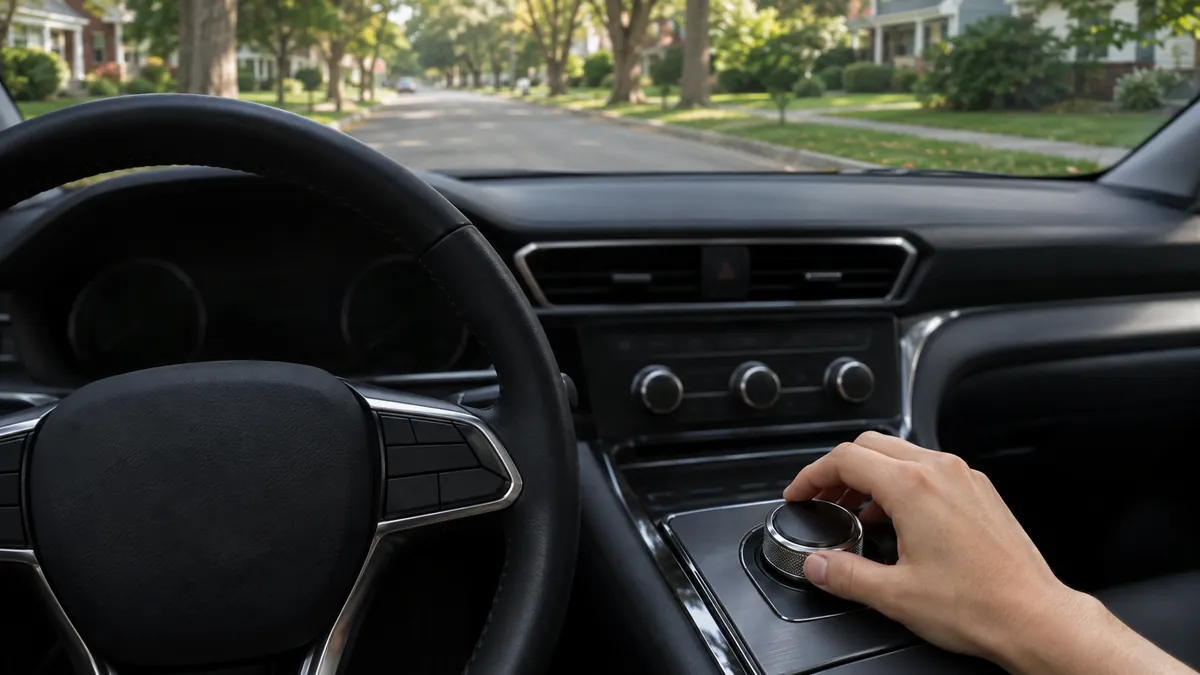
The look on the second lap
We send every test drive around the same quiet loop behind the lot: a long straight, a gentle right, a stop sign, a narrow street with parked cars on both sides, and back. A driver who has owned the same kind of car for twenty years often gets into something newer and freezes for a second. The parking brake is a button now. The gear selector is a dial. The screen in the middle wants a decision before the engine is even running.
On the first lap, people grip the wheel and talk less. On the second lap something changes. They start to name things as they go, as if teaching themselves out loud. Button for the brake. Dial, turn, D. Wipers on the right stalk, not the left. By the stop sign they are smiling, sometimes laughing at the wiper mistake. That shift, from clumsy to curious, is one of the best things we get to watch on this job, and it has very little to do with cars.
Why the clumsy part is worth having
Most of what fills an ordinary week is familiar. We drive the same routes, cook the same dozen meals, sit in the same chair. Familiarity is restful and there is nothing wrong with it. But a mind that only ever runs on familiar roads gets very little practice at building new ones.
Learning something unfamiliar asks for exactly the effort that routine lets us skip: holding a new step in mind, making small errors, correcting them, trying again. It feels slightly uncomfortable, and that discomfort is not a sign of failing. It is what learning feels like from the inside at any age. A good number of studies over the years have followed adults who took up something genuinely new later in life, a language, an instrument, a craft, and many of those learners describe feeling sharper and more engaged once they are through the awkward first weeks. The awkward weeks are the price of admission.
Choosing your own test drive
The car is just our example. Your test drive could be anything you have never done and would like to: the guitar in the closet, a beginner's class in drawing, the grandkids' card game with rules nobody explains clearly, a new route on foot through a part of town you never walk. A few things make the start easier.
Pick something with hands in it. Activities that involve both thinking and doing seem to hold attention better than ones that are only watched or only read.
Keep the first sessions short, like our loop. Twenty minutes of trying is better than an afternoon that ends in frustration. Come back the next day for the second lap.
Talk yourself through it. Naming each step as you do it, the way drivers do on the second lap, slows you down just enough to learn instead of guess.
Expect the wiper mistake. Something will go wrong in the first week, probably something small and a little funny. Laugh at it, write it in your notebook if you keep one, and do the next step.
What it says on the paperwork
When a test drive ends and the customer hands back the key, we write a short line in the log: date, car, two laps. A few of those customers come back weeks later in their new car and tell us they hardly remember being nervous. That is the point. The unfamiliar becomes familiar, and the mind gets a little more practice at the turning, which it will need again.
Stapled to the back of this entry
Learning a new skill is a pleasant way to keep your days interesting; it is not a medical measure of any kind. If you notice that new information is becoming much harder to hold onto than it used to be, or a person who knows you well has remarked on it, raise it with your doctor.
Ask your doctor as well before taking up anything physically demanding.