- Reading
- 063 075
- Where
- Two folding chairs by the office door
- Note
- Tell it in order, then let them ask
What the Second Owner Hears
When a consigned car finds its buyer, the two owners usually meet for ten minutes by our office door. The keys change hands at the end. Before that comes the story.
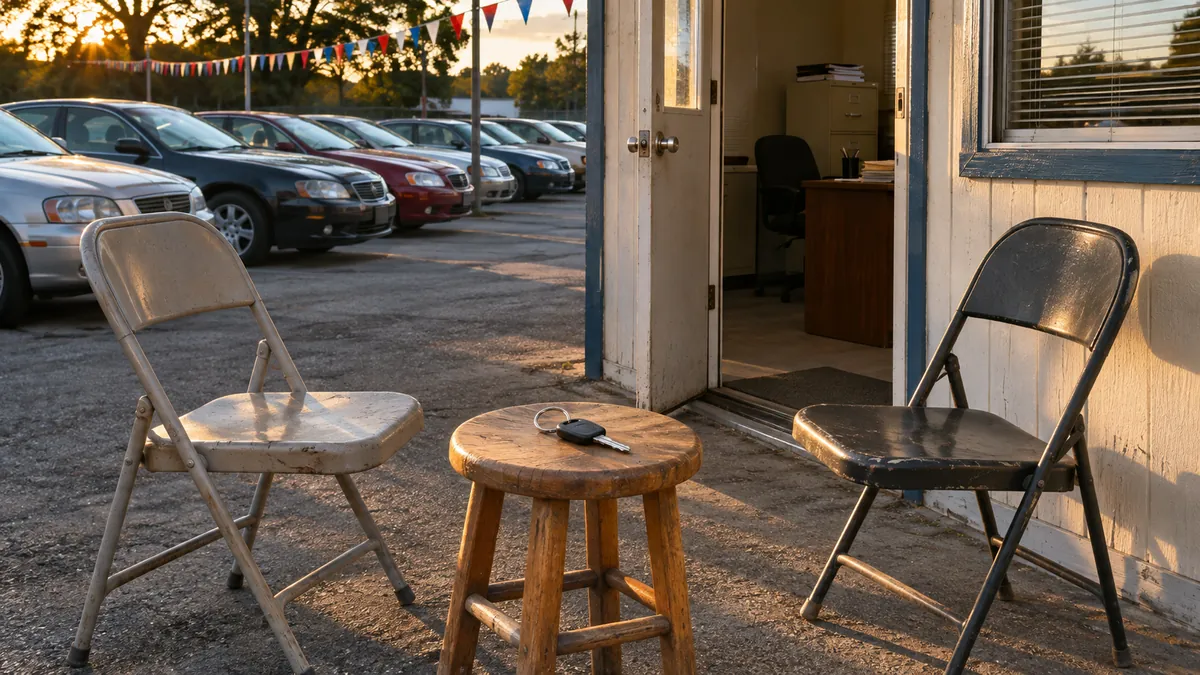
Ten minutes of history
We never ask sellers to tell the buyer anything; most of them want to. A man in his sixties, handing over the pickup he drove for nine years, spent a quarter of an hour explaining the truck to the young woman buying it. The clutch is heavy at first, give it a week. The radio only finds the good station if you point the antenna back. The scratch on the tailgate was his grandson and a bicycle, and he left it there on purpose. He went through it in order, front to back, the way he must have walked around it a thousand times, and when he finished he asked if she had questions.
She had several, and he answered each one without hesitating. Afterward he told us he had not thought about half of those things in years, and that saying them out loud brought back details he would have sworn were gone: the name of the shop that rebuilt the transmission, the summer the air conditioning gave out on a long drive to the coast. Telling the story did not only hand it to her. It handed it back to him.
Why saying it helps you keep it
Explaining something to another person is a demanding kind of remembering. You have to pull the pieces up, put them in an order that makes sense to a listener and fill the gaps they ask about. Teachers often say they learned their subject properly only once they had to teach it, and the same holds outside a classroom. The effort of telling seems to strengthen the telling.
Conversation offers something more as well. Talking with people regularly, especially about things that matter to you, keeps the mind working in a lively, unpredictable way that solitary routines rarely match. Plenty of people past fifty notice that a week full of real conversations leaves them feeling clearer than a week spent mostly alone with a screen. Researchers who look at social connection and healthy aging have returned to that theme many times. It is not a mystery; it is simply how people are made.
Finding your own second owner
You may not be selling a pickup, but you almost certainly know things someone else would like to learn. A few ways to put that to use:
Tell one story a week on purpose. Choose something you know well, a song your mother used to hum, how you fixed the porch steps, the year you lived in another city, and tell it to someone properly, from the beginning, in order.
Write the outline first. Three or four lines in a notebook before a visit with the grandkids or a call with an old friend will help the telling come out whole.
Invite the questions. The listener's questions are where your memory does its best work, reaching for the detail you did not plan to mention.
Pass on the notebook, too. If you keep a log for your car, your garden or your workshop, hand it on when the thing itself changes hands. The next owner will thank you, and you will have read it through one last time before letting go.
The last line in the log
When the pickup left, we wrote what we always write: date, vehicle, keys handed over. Below it, in the margin, someone on our team added a few words about the scratch on the tailgate. The story had already found a second home.
Stapled to the back of this entry
Telling stories and keeping company are pleasures in their own right, and they are not a substitute for medical care. If remembering familiar names, places or events has started to feel noticeably harder, or someone who knows you well has raised it, speak with your doctor about it.
Before you reshape your days around anything printed here, put the question to your doctor first.